



How to Calculate Rate Analysis: A Step-by-Step Guide for Construction Professionals
Why Rate Analysis Matters
Rate analysis is the foundation of accurate construction cost estimation. It breaks down costs into materials, labor, equipment, overhead, and profit margins. Done right, it ensures you’re competitive without bleeding margin. Done wrong? You’re either losing bids or losing money.
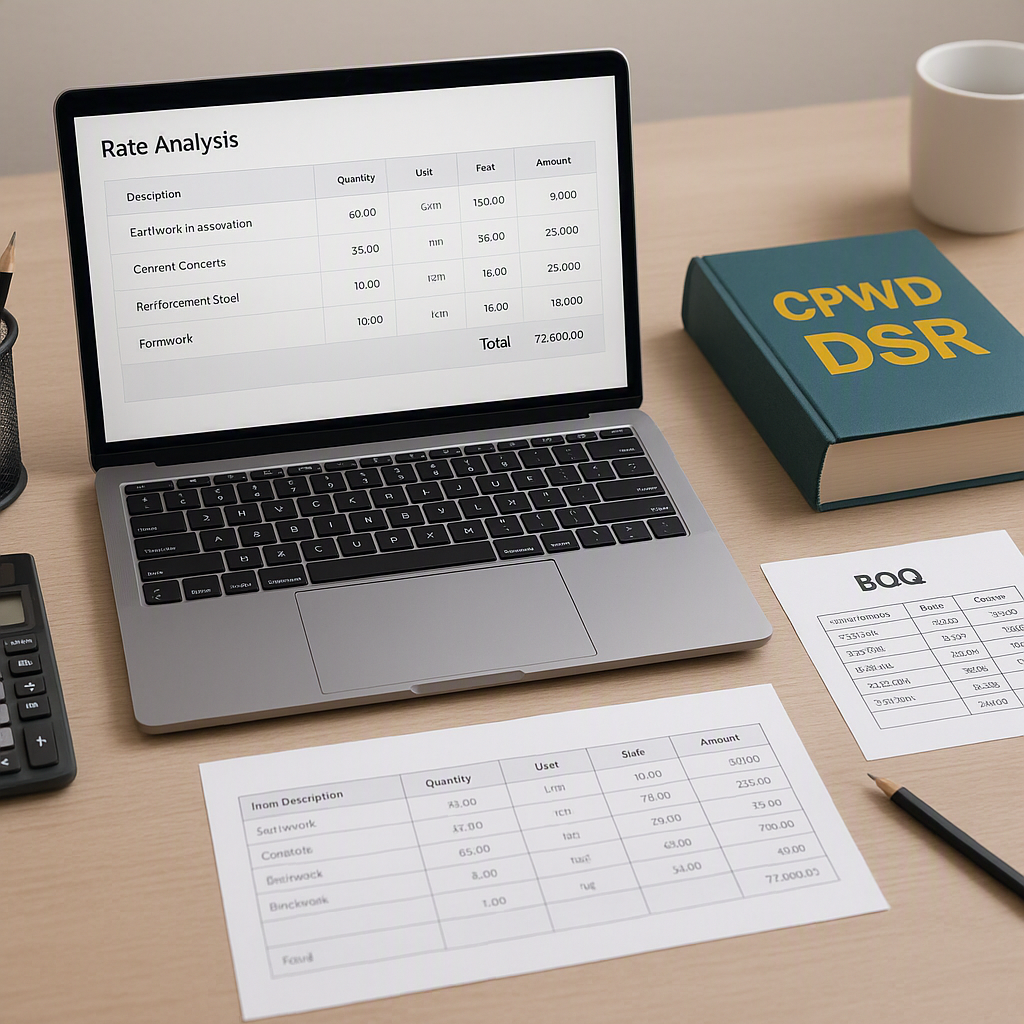
Manual rate analysis can be slow and prone to errors. If you’ve ever flipped through a lengthy CPWD DSR or juggled multiple Excel sheets to adjust one rate, you know the frustration. Even small mistakes can derail an entire bid.
Here’s a step-by-step guide to calculating rate analysis, followed by how tools can streamline the process.
Step-by-Step: How to Calculate Rate Analysis
1. Understand the Rate Analysis Formula
At its core, rate analysis is simple:
Rate = (Material Cost + Labor Cost + Equipment Cost) × (Overhead % + Profit %)
The challenge lies in breaking this formula into actionable steps and finding the right inputs. Let’s break it down further:
2. Gather Material Costs
Identify all materials required for the task. For each material:
- Calculate the quantity needed (e.g., cubic meters of concrete, kg of steel).
- Match these quantities to unit prices from a reliable source (e.g., CPWD DSR, RSMeans, or vendor quotes).
3. Factor in Labor Costs
Labor rates vary by region and trade. For example:
- Calculate hours required for each activity.
- Multiply by the applicable wage rate based on local standards or agreements.
Labor costs are often underestimated. Studies have shown that labor overruns can significantly impact project budgets.
4. Include Equipment Costs
For equipment, consider:
- Rental rates (daily/hourly)
- Operating costs (fuel, maintenance)
Allocate these costs across the total work completed by the equipment to ensure accurate estimates.
5. Account for Overheads and Profit
Overhead includes indirect costs like site office expenses, utilities, and insurance. This is typically expressed as a percentage of the total direct costs. Profits are added as a markup on top of total costs.
Common mistake? Forgetting to adjust for project-specific risks. Urban projects, for instance, might demand higher insurance premiums due to stricter safety regulations.
6. Adjust for Inflation and Regional Variations
If your project spans multiple years, you’ll need to account for inflation. This is where things can get messy. For instance, the CPI (Consumer Price Index) for your region might suggest an annual increase in costs. Apply this adjustment to your material and labor rates.
Adjusting rates manually across a large BOQ can be time-consuming. Automated tools can help streamline this process by applying regional CPI data to your catalog.
Common Mistakes in Rate Analysis
- Relying on Outdated Data: Rates change, often rapidly. If you’re using old rate books, you’re already behind.
- Ignoring Regional Variations: A rate that works in one region may not be applicable in another. Always consult local SORs.
- Underestimating Indirect Costs: Site expenses, safety equipment, and compliance costs add up fast.
- Overlooking Inflation: Multi-year projects need inflation-adjusted rates. Forget this step, and your margins disappear.
How Tools Can Save Time and Reduce Errors
Manual rate analysis is prone to human error and can be time-consuming. This is where AI-powered tools come in. These tools can:
- Material Matching in Seconds: Quickly match BOQ items to relevant SOR entries.
- Automated Build-Up: Provide a detailed breakdown of material, labor, and equipment costs with full transparency.
- Inflation Adjustments: Automate adjustments for project duration and regional CPI data.
By automating repetitive tasks, these tools can free up your team to focus on bidding strategy and project execution.
FAQ
1. What’s the best source for material and labor rates?
For India, CPWD DSR and state SORs are the gold standard. In the U.S., RSMeans is widely used. For custom rates, vendor quotes are essential.
2. How should I handle regional cost variations?
Always use region-specific SORs or adjust for local price indices. For multi-region projects, automated tools can handle variations efficiently.
3. How often should I update my rate analysis?
Rates should be updated quarterly at a minimum, especially for long-term projects. Inflation and market dynamics can change quickly.
Conclusion
Rate analysis doesn’t have to be a time sink. With the right process and tools, you can cut through the complexity, save hours, and bid with confidence. If you’re tired of juggling Excel sheets and outdated rate books, consider exploring automated solutions to streamline your workflow.
Learn more at JobNext.ai - Construction ERP
Put this into a real cost estimate
Describe your project and get a complete, costed estimate in about a minute — free to start.